Posts

Showing posts with the label HRM

When learning is work and work is...

Harold Jarche has a great blog and shares a lot of his thinking on old HR and old learning and what social learning could bring to organizations. Recently he had a post titled 'Work is learning and learning it the work' that got me thinking. He basically opposed against pulling learning and work out of each other, as it seems to be in many companies. This is shown by the fact that most companies have someone responsible for learning (HR manager or Learning & Development manager) and formal (online) training. Learning should be the work. Maybe it's even stronger: Learning is the work. Harold challenges us to actively observe how people are learning to do their job right now. But why is this so hard for companies? I've written about Peter Senge's book before. Hardly any companies I know can truly be called a learning organization. And Senge's book has been out for more than 20 years now... As Harold proposes, a simple step could be to "provide t...
Mastering the Social Work Mindset - HR and Enterprise 2.0 #e20s

Image
This breakout (track 3) at the Enterprise 2.0 Summit is about 'Mastering the social work mindset'. Breakout speakers are Anthony Poncier and Ellen Trude . Anthony kicks off with a sort presentation about HR and Enterprise 2.0. (Last year there was only one participant from the HR department at this Summit. This year there are many more.) HR should be on the wagon because people are the core of organizations. McKinsey recently stressed that the role of HR in E2.0 is essential. Why? Because of the inter-generational cultures (millenials, etc.), new job descriptions (like the community manager), talent management, impact on visibility and mobility (career development, L&D), etc. It's important to look at and change the tradition HR processes for E2.0 success. Ellen doesn't like the word training relating to social media and enterprise 2.0. Training is too much a one-way lecture. At Ellen's company they developed a social learning environment. The courses a...

Building a Company on Happiness

Zappos is a bit far away from a Dutchman. We don't have it here, yet. But of course you hear a lot about them. Zappos is praised for its culture, very engaged workforce, use of social media in business, great profit, etc. Recently I wrote a post about 'Organizing on Passion'. Frederik Vieten , a student doing research at Océ, pointed me to Tony Hsieh's new book, Delivering Happiness . I hadn't heard of it yet, so that was a great pointer. I'm going to order and read it. But I also browsed the site and found a recent talk by Hsieh at Google . Man, I watched it this talk this evening. And it's absolutely great. If you have an hour, just sit down, watch it and be inspired. What a great company and what a great leader Tony is. Here's the video: I really liked the way the importance of company culture is stressed and how it can be crafted. I also love the way they select new employees based on questions linked to their core values . One of the most ...

Organizing on Passion

Image
It's been a while ago since I read the great Shift Index 2009 report . I've been wanting to blog about it, but haven't had time yet. It's loaded with interesting insights. One big question I had is: This report is focused on the USA; how does this compare to Europe or Asia? One thing from the report that stuck with me, was the importance of 'creative talent' and getting them to engage in 'creative problem solving, often by connecting with peers inside and outside the firm' (p. 11). On page 70 the report goes on to talk about 'worker passion'. The findings are pretty saddening. Lots of workers are not passionate about their work and self-employed workers are much more passionate than the firm-employed. The larger the size of the firm the less passionate workers get... I went back to the Shift Index after reading a couple of things: Steve Denning's post about the H in HR , which also points to the Shift Index and the importance of eng...

Recruiting New Style

Thomas Friedman in The World is Flat and Don Tapscott and Anthony Williams in Wikinomics have predicted that the way companies will recruit people will be fundamentally different in the future. In the past the model was easy: Get the best and brightest people to work for you. Of course these new employees would move close to your company and work inside the firewall as much as possible. Of course we've seen some movement in this area. Outsourcing of jobs to India or China. Tele-commuting, working-more-from-home, etc. At first I thought it looked like Google has taken this a step further . But this is fake (Twitter spam...). But the idea is great and got me thinking. In short the site said: Everyone with a computer and a broadband connection can work for us right from their homes. (And aren't we already, but clicking on links!? ;-)) Seriously, this could be interesting and big in my opinion. This 'offer' is 'only' focused on the US and Canada. But what if...

Beyond the Ordinary Resume

Nice post on 'the new resume' or 'do we still need a resume?' by Debra Murphey on Social Media Today Most companies still request a resume. This post states old resume's make you "ordinary". So, what isn't ordinary? Everyone, whether you are an independent professional, business owner, or entreprenuer, should have the following in your social media portfolio: Complete profiles on LinkedIn , Facebook , Twitter and other social networks relevant to your expertise. A blog written with authenticity and expertise. An about page on your blog that gives the reader a sense about who you are. Comments on other blogs within your expertise that are thoughtful, professional and add value to the blog. Put presentations you’ve given up on SlideShare and link to them from your About page. If you have a recording of the presentation, you can sync the audio with the slides. I was wondering if companies are already doing this. Does any...

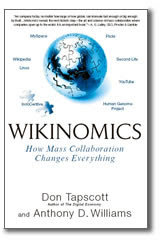
Wikinomics

Image
Just recently HBR IdeaCast had a cool interview with Don Tapscott . He's one of the authors of Wikinomics . How mass collaboration changes everything . I just ordered the book. Tapscott has some interesting remarks. I'll give you a few snippets: "You have four big factors coming together at this unique time in economics and in human history: 1. the new web, ... the old web was a publishing platform ... The new web is based on XML and it's creating a giant global computer that everyone programs whenever they use it. So this is creating a platform for self-organisation. 2. Second factor, there's a demographic revolution. The children of the baby boom are the first generation grown up bathed in bits. These kids are different, they process information differently, they think and behave differently. And they are now the biggest generation in the workforce and in the marketplace, they're coming into the workforce and the marketplace. Put those two together and you...