Posts

Showing posts with the label business

The Road to New Models of the Social Enterprise by @richardcollin and JC Kugler #e20s

Final keynote of day 1 of the Enterprise 2.0 Summit. Richard Collin  and Jean-Christophe Kugler of Renault will talk about New Models for the Social Enterprise. Just refer to Emanuele Quintarelli's post  (scroll down to part of the post about this keynote). ;-)

Social Business Excellence by Yves Caseau #e20s

Image
Yves Caseau of Bouyeau Telecom is the second keynote at the Enterprise 2.0 Summit. His talk is about Social Business Excellence. Caseau starts out by giving an overview of the changing landscape and the need for social business. But also shows that elements of Enterprise 2.0 are very old (e.g. lean and 2.0 are closer than you think). His slides give a nice overview of the elements of social business found in lots of older management books. It shows that social business is an integration of many (older) insights. There is a need for more business agility, because environments are changing faster and are more complex. Enterprise 2.0 is a cure for "common congestion". Enterprise 2.0 solves 1.0 problems. For instance, how do we reach the right people. E2.0 tools help to do this faster and easier. And, another example, slow convergence of multi-author editing. Recommendations: Integrate 2.0 in (decision and business) processes, not next to it Laissez-faire & faire...

Fire all the managers?

Image
I listen to the HBR Ideacast regularly. Recently Gary Hamel was interviewed about his HBR article 'First, Let's Fire all the Managers' . As you may know Hamel has devoted a large part of his life to thinking about better ways to organize and manage companies. What kind of management (if any) does this time period need. Of course, Hamel goes into why he wrote an article about this topic. But to me the most interesting part was that Hamel provides examples of companies that don't have management. When I was listening I caught myself thinking: Yeah, less management would be great, but can we really live without them? Hamel shows it can be done. He points to one company called Morningstar for instance. Very interesting and thought-provoking! What do you think? Can your company or could you live without management?

The invisible company

Eryc Branham recently posted an interesting article about 'The invisible company' over on ReadWriteWeb . I think his post also underlines that companies are inherently social. A company is a collection of humans. And (most) humans are social beings. I find most people don't look at companies this way. I hear lots of talk about social business as if business' are only social if they use social media internally and interact with the market via social media. Companies aren't social when they use social media. But, as Eryc says, social tools can be and should be used to make the social interactions between colleagues visible.

Interview Marc Benioff and Eric Schmidt at Dreamforce 2011

Image
Recently took the time to watch some Dreamforce 2011 talks. There's lots to learn from them. I particularly enjoyed Marc Benioff's interview/talk with Eric Schmidt . I liked the way they stepped back and looked at the history and future of the technology industry in general, and the internet especially. Just to list some of the questions they talked about: what the future of the manufacturing industry (in the US and Europe) will be? Why is it hard for existing players to move to new technology standards? What should an existing company do when technology shifts? Where is 'cloud' and 'social' going? What is the potential of the internet for business and government? Is this only for large companies or more so for small companies? In short the future according to Schmidt is: mobile, local and social. And here's the whole talk for you. Hope you enjoy it!  

Will Everything be Free? – My Review of Free

Image
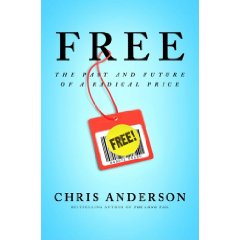
So, I’m on a roll now. As promised I would share my review of several books. This is the next one: Free by Chris Anderson. An article in Wired about Free triggered me to read this book. Free is a big deal nowadays. Many products and services are offered for free. And people are making lots of money charging nothing. “Not nothing for everything, but nothing for enough…” (p. 3) Free has always been around a long time, but it’s changing. The internet seems to be doing something interesting to what we pay for things. “Somewhere in the transition from atoms to bits, a phenomenon that we thought we understood was transformed. “Free” became Free.” (p. 4) This book is about this phenomenon. Chapter 1-3 dive into the fascinating history of free. And the different kinds of free: direct cross-subsidies, three-party market, freemium and nonmonetary markets. (p. 23) Free started out as a marketing method. Now free is an entirely new economic model. (p. 12) The old free was based on the econ...

Are Millenials Really that Different? - My Review of Grown Up Digital

Image
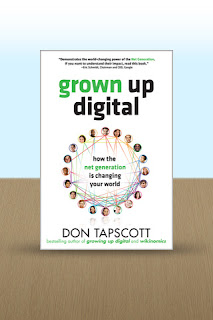
Are millennial really that different? Do they play, learn, communicate, work and create differently than their parents? Are they smarter or dumber? More or less social? And if so, what should we know about them? More importantly, what should management and companies know about them, because they are the future. Lots has been written about the so called millennials or Generation Y. I've been following the news and research on them. When Don Tapscott wrote a book about being 'grown up digital ' I thought I'd read it. At that time I was becoming more skeptical about the stories about Gen Y. In daily practice I was seeing older colleagues quickly picking up new ways of working, while young colleagues were very reluctant to use new media. Technically I'm not a millennial. I don't belong to the 'Net Generation'. The generation that has been "bathed in bits". According to Tapscott someone's part of the Net Generation when you're born bet...

Macrowikinomics, Rebooting Business and the World - My Review

Image
A while back I read Wikinomics , by Don Tapscott and Anthony Williams. I really enjoyed it. So when they published a new book, Macrowikinomics. Rebooting Business and the World , I was curious, bought and read it. The book Wikinomics was about the power of mass collaboration for business. But this new model of collaboration goes beyond a business or technology trend. It's a "more encompassing societal shift". So, this new book wants to show how wikinomics and its core principles can be applied to society and all of its institutions. Principles What are the wikinomics principles? The 6 principles summarized for you with a quote. Collaboration - "... the collective knowledge, capability, and resources embodied within broad horizontal networks of participants can accomplish much more than one organization or one individual can acting alone. Of course, hierarchies won't disappear from the economy in the foreseeable future. Nor are we likely to see large top-...

A Brief History of the Corporation

Image
There are lots of good bloggers and blogposts out there. But every now and then I run into a post that is just great. This is one of them: A Brief History of the Corporation: 1600 to 2100 by Venkatesh Rao. It's a long post! So, make sure you have some time to read and process it. Why do I think this post is so interesting? Well, there's been lots of debate about what social media means for traditional business. Will it change or is it changing the way we do business? Is the traditional, hierarchical way of organizing companies sustainable? Is social media correcting the industrial revolution? Or should we say 'the industrial interruption', like 'The Cluetrain Manifesto'  says. Is this enterprise 2.0 or social business? Much has been and is being written about this topic. Just think of the books 'Wikinomics' , 'Macrowikinomics' and 'The Cluetrain Manifesto' itself. So, what is this post about. In it's own words: The Age ...

Use Less of Your Product

Image
I love challenges like in this post . Andrew Winston has an interesting post about asking customers to use less of your product. So you're in the printing business: ask your customers to print less. Or you sell hamburgers or books, ask them to buy less. Thinking in this way can open you up to new opportunities and business. Sometimes you are forced to think this way. Let's make this concrete. If you were a printing company, would you advise your employees to add a footer to every email saying: Please don't print out this email! Of course many would say: Hey, but this would cannibalize my business! True, but as the above-mentioned article says: It's better to do it yourself, than that someone else is doing it to you. I think we can also flip this challenge to ourselves. Think about what you would do if your customer (member of family, friend or client) would use less of your product/service. What would you do?

From Jam to Action. Enabling Organizational Transformation with Social Busines by Stuart J. McRae @smcrae #sbs2011

Image
Stuart McRae 's talk will be about IBM's experiences with internal jams. Jams were started in 2001. In 2003 they did a value jam . What's a Jam? An online forum on which people can post ideas, discuss them, etc. They learned that what happens on the backend is essential for the success of the jam. It makes the results richer. Jams leverage the collective wisdom of the organization. They have real-time metrics running in the background, visualized to see who's participating, what are the themes, etc. What happens after the jam? Sometimes it's easy. With the Jam about values the values were the result. But sometimes it's more complex. Elements of the Jam are: vision, strategy, purpose Jam! Analysis (e.g. understand why people comment) Champions & Leaders workshop (about 100 employees, face to face networking related to themes) Work streams to turn ideas into action The most important thing after a Jam is to continue the conversation out in the open. (They did ...

Cascading Change: Small Moves, Smartly Made, Can Set Big Things into Motion by John Hagel @jhagel #sbs2011

Image
Next talk (no slides!) by John Hagel about Cascading Change: Small Moves, Smartly Made, Can Set Big Things into Motion. We are moving to a world of increasing returns. This world is very different from the world we were in, the world of decreasing returns. This movement can be typified by moving from business as stock to flows. Stocks was about: build up knowledge, protect it aggressively and capitalize on it. But in a world of excelerating change, these knowledge stocks rapidly diminish in value. (Except for companies like Coca Cola.) New opportunities are in the area of knowledge flows. And this is where social tools come into place. Not only used insides companies but also over institutions. There are even more values between institutions than inside them. Some say we should move fast here. But Hagel's approach is: move slowly so they trigger cascades and are sustainable over time. Social software adoption approaches: bottom-up, starting in teams deploy it in a section ...

Nature doesn't do SLA's @jobsworth #sbs2011

Image
Jeff Dachis and Lee Bryant kicked off the Social Business Summit 2011 . JP Rangaswami takes the stage with the first talk titled: Nature doesn't do SLAs. It's a shame that we live in a world in which we need a term as social business. It's tautological. We are rediscovering something we lost. The Cluetrain Manifesto helped him see this again. We lost something and need to refind it. His talk was built around three concepts: change, context and conflict. Change Work is changing: "Historical businesses were hierarchies of products and customers." We have been overlaying the industrial age model on knowledge workers. We did the same for healthcare and education, he remarks. And we now see this doesn't work and is generating problems. Knowledge work is not linear, not repeatable, not a process. Knowledge work is lumpy. And the good thing is the tools are changing rapidly as well. Change is a constant. He illustrates this with the touch innovation. And voice, talk...

A Holistic Approach to Enabling the Collaborative Enterprise #e20s

Image
Lee Bryant closed the Enterprise 2.0 Summit with a talk about Social Business. Where's Enterprise 2.0 headed next? It's in the direction of providing real business value. Enterprise 2.0 has been adopted at least a bit by most organizations. There's a nice spread of use cases, showed by research supported by Headshift . Lee sees Enterprise 2.0 as a Trojan mice for organizational change. Small but impressive changes to the organization. Enterprise 2.0 is still in the early phase, patchy and tool-centric (like the KM wave was in the beginning). We're looking for quantifiable business improvements, like: lower operational costs networked productivity business agility effective management (move away from information hostages: businesses run by writing and moving report up and down the ladder) customer centricity (Listen! But many companies lack a structure to socialize what you're learned by listening) Where is business practice going...

Is Your Organization a Process or a Network?

Image
Is your organization a process (several operational steps to get things done) or a network (smart knowledge workers connecting to get things done)? Or is it both? As an information architect I'm often confronted with this question. Usually not explicitly, but in a more implicit way. From an information process perspective you hear people talking about structured and unstructured information processes, for instance. I've shared my thinking about this topic in the past and I'm working on a longer post about this subject (to be published soon). I thought I'd start with something different. Three pictures to show the different views on organizations and how they relate. I'd love to hear you thoughts about these pictures. What I see is managers and business process specialists look at organizations in this way: So, the organization is put together as discrete, operational steps moving packets of information (the gray boxes) forward. (Loops back into the organiz...

Rupture - Are You Ready for the 21st century?

Nice video by Michel Cartier titled "Are you ready for the 21st century?" (Found via Luis Suarez on his blog - thx!) Are You Ready for the 21st Century ? from Michel Cartier on Vimeo .

Intranet in 2020 #intra10

4th keynote at Intranet 2010 by Peter Hinssen . Will intranets be around in the future? 4 fundamentals: content (old, put stuff somewhere) intelligence knowledge collaboration (newer, share things) The trash bin is not used a lot in IT. We are drowning in information but are starved of knowledge - John Naisbitt. Is information still of strategic value? Paperless office Consumerization of IT. Leading to new behavior wrt information. Information behavior is key. It's moving quicker than hardware development. Digital is the new normal. We are half-way there. Let's take this to the limit. It's not information overload, but it's filter failure. Show me your folders and I will tell you who you work for. The depth of information will go to infinity. The price of information will go to 0. Privacy, we will live in a fish-bowl society. Patience is also going to 0. Users don't want to fill things out again and again. And the internet will be real-time. Now refl...

Scale or Vision

Image
I've been wanting to share a thought with you for some time now. Here goes! Every now and then (too often in my opinion) you hear managers of companies say: "We need scale, we need to expand to be profitable." This remark leads to a new acquisition (sales channel e.g.) or a merger. This statement puzzles me. I understand what it says, but I tend to disagree with it. It sounds like: The Bigger the Better. We all know and experience this doesn't have to be true. It can be true. This statement simply implies that it is true. Or am I mistaken? Is this a statement that is economically and logically correct? Please tell me if I'm wrong. So, I disagree with this statement (for now). And I think it tends to mask an underlying problem. Talking about scale moves a company away from thinking about vision. Why does our company exist? What are we good at? Who are our competitors? What do we want to be good at? Etc. When you have a sound vision, you can define a roadma...

Viral Aspects of Yammer

Some time ago I posted about Océ 's enterprise microblogging initiatives. As you know Jan van Veen (Corporate Communications) and I are leading this project and enjoying it! Recently Jane McConnell, the intranet guru , left a new comment on my post " Implementing Enterprise Microblogging with Yammer ". She wrote: Hi Samuel, Good post. I'd already seen it, but now I have a specific question: You talked about updating the org chart and it being a viral touch for spreading the use of Yammer. Could you explain a bit more. I didn't get exactly the relationship. Jane Good question. I was a bit short on this interesting topic. One of the things I find interesting in technology adoption is: How do you get people to use a new tool or technology? Sometimes it's because everybody is using it. Another reason could be because it's superior technology with better features. One of the most interesting adoption strategies is making the technol...

What Do Twitter Lists Mean to Me and for Business?

Image
What do Twitter Lists mean? I think it will take a while to find out. Jeremiah Owyang points to recruiting: When hiring see on how many Lists they are mentioned . Debbie Weil calls Lists "the new measure of cool" . Denis Hancock of Wikinomics also relates Lists to popularity, but wonders if popularity relates more to the number of people that follow your lists or the number of lists you're on. And Robert Scoble shares how Lists have changed the way he follows tweets. I'm happy we have lists. One of the reasons people were using Tweetdeck , Brizzly and the like had to do with the fact that Twitter.com had no functionality to group the people you follow. And what these groups meant to us was clear. They were our own private groups in Tweetdeck and Brizzly. Of course there were sites that helped people find tweeps related to certain topics. For instance Wefollow . However in Wefollow you could say which list you wanted to belong too. The amount of followers and ...